
Introduction
In today’s fast-moving world, people are always looking for ways to understand their bodies, improve focus, and feel more balanced. One concept that has quietly gained attention is pulsamento. While the word may sound new or unfamiliar, the idea behind it is quite simple and connected to how our body naturally works.
This guide will explain everything you need to know in a clear and easy way. You will learn what it means, how it works, why it matters, and how you can use it in your daily life. The goal is to make this topic so simple that even a Grade 7 student can understand it without confusion.
We will also look at real-life uses, benefits, and practical tips. By the end of this article, you will not only understand the concept but also know how to apply it safely and effectively.
Let’s start with the basics and build step by step.
What Is Pulsamento?

At its core, pulsamento refers to a rhythmic or repeating pattern that happens naturally in the body or environment. It is closely linked to the idea of pulse, movement, and flow.
Think about your heartbeat. It follows a steady rhythm. This rhythm helps your body stay alive and balanced. In a similar way, pulsamento describes patterns that repeat in a smooth and natural cycle.
These patterns can be found in:
- Breathing
- Heart rate
- Brain activity
- Daily habits
It is not just a scientific idea. It can also be used in wellness, mindfulness, and even creative fields like music and design.
The important thing to understand is that pulsamento is about consistency and rhythm. When things move in a stable pattern, systems work better. When the rhythm is broken, problems can appear.
This simple concept makes it useful in many areas of life.
Why Pulsamento Matters in Daily Life
You may not notice it, but your daily routine already depends on rhythms. From sleeping to eating, your body follows patterns. This is where pulsamento becomes important.
A balanced rhythm helps:
- Improve energy levels
- Support better sleep
- Reduce stress
- Keep the mind focused
For example, if you sleep at the same time every day, your body adjusts and functions better. If your routine is random, you may feel tired or unfocused.
In modern life, many people lose this natural rhythm due to:
- Too much screen time
- Irregular schedules
- Stress and pressure
Understanding pulsamento helps you bring back balance. It teaches you to align your habits with natural cycles.
Even small changes, like taking breaks at regular times or eating meals on schedule, can make a big difference.
The Science Behind Rhythmic Patterns
Science supports the idea that our bodies depend on rhythms. These are often called biological rhythms.
Our bodies follow cycles such as:
- Circadian rhythm (24-hour cycle)
- Heart rhythm
- Brain wave patterns
These rhythms help control:
- Sleep and wake cycles
- Hormone release
- Body temperature
When these cycles are stable, the body works smoothly. When they are disturbed, problems can occur.
This is where pulsamento connects with science. It reflects how these natural rhythms operate and how they affect our health.
You don’t need to understand complex science to use this idea. Just knowing that your body needs regular patterns is enough to start improving your lifestyle.
Common Examples Around You
You can find examples of rhythmic patterns everywhere. Once you start noticing them, you will see how common they are.
Here are some simple examples:
| Example | Description |
|---|---|
| Heartbeat | Regular pumping of blood |
| Breathing | Inhale and exhale cycle |
| Walking | Step-by-step movement pattern |
| Music beats | Repeating sound rhythm |
| Day and night | Natural cycle of time |
These examples show that pulsamento is not something rare. It is part of everyday life.
Even your habits follow patterns. For instance:
- Morning routines
- Study schedules
- Exercise timing
Recognizing these patterns helps you improve them.
Benefits of Understanding Pulsamento

Learning about pulsamento can bring many benefits, especially when applied correctly.
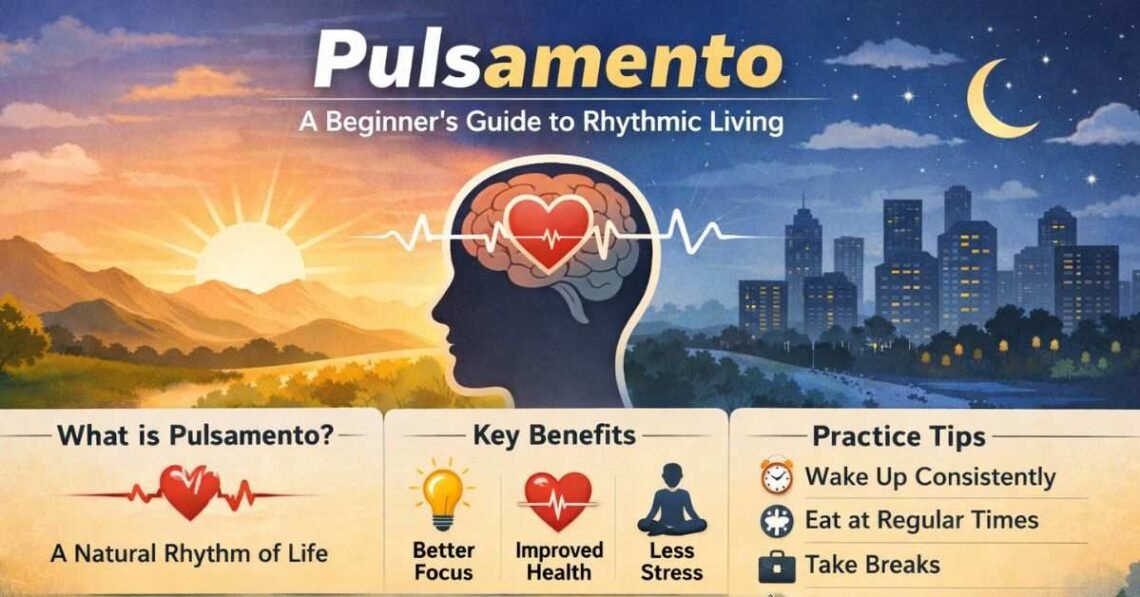
Key Benefits:
- Better Focus
When your routine is stable, your brain can concentrate more easily. - Improved Health
Regular sleep and eating patterns support overall health. - Less Stress
Predictable routines reduce mental pressure. - Higher Productivity
Working in a rhythm helps you complete tasks faster. - Emotional Balance
Consistency can improve mood and reduce anxiety.
How to Apply It in Your Routine
You don’t need big changes to use pulsamento in your life. Small steps can make a big impact.
Simple Ways to Start:
- Wake up at the same time daily
- Eat meals on a schedule
- Take short breaks during work
- Sleep at a fixed time
- Exercise regularly
Here is a simple routine example:
| Time | Activity |
|---|---|
| 7:00 AM | Wake up |
| 8:00 AM | Breakfast |
| 10:00 AM | Study/work |
| 1:00 PM | Lunch |
| 6:00 PM | Exercise |
| 10:00 PM | Sleep |
This type of structure helps your body and mind stay in balance.
Mistakes to Avoid
While trying to build a rhythm, people often make mistakes.
Common Mistakes:
- Changing routines too often
- Skipping sleep
- Overworking without breaks
- Ignoring body signals
These actions break the natural flow and reduce the benefits of pulsamento.
Instead, focus on:
- Consistency
- Balance
- Listening to your body
It’s better to start small and stay regular than to make big changes and fail to follow them.
How to Practice Pulsamento
Practicing pulsamento means creating and maintaining a steady rhythm in your daily life. The goal is not perfection but consistency. By following simple steps, you can align your body and mind with natural patterns and improve your overall well-being.
Build a Fixed Daily Routine
Start by setting regular times for waking up and going to sleep. Your body loves consistency. When you sleep and wake at the same time every day, your internal clock becomes stable. This improves sleep quality, energy levels, and focus.
Follow a Meal Schedule
Eating at random times can confuse your body. Try to have breakfast, lunch, and dinner at similar times each day. This supports digestion and keeps your energy steady throughout the day.
Use Time Blocks for Work and Study
Instead of working for long hours without breaks, divide your time into blocks. For example, work for 25–50 minutes, then take a short break. This creates a rhythm that helps your brain stay fresh and productive.
Practice Breathing Awareness
Your breath is one of the easiest ways to feel rhythm. Spend a few minutes daily focusing on slow, steady breathing. Inhale deeply, then exhale slowly. This simple exercise can reduce stress and bring your body into balance.
Add Physical Movement
Regular movement, such as walking, stretching, or light exercise, helps maintain a healthy rhythm in your body. Try to move at the same time each day to build consistency.
Limit Disruptions
Modern habits like late-night screen use, irregular sleep, and constant notifications can break your rhythm. Try to reduce screen time before bed and create a calm environment for rest.
Listen to Your Body
Your body gives signals when something is wrong—like fatigue, stress, or lack of focus. Pay attention to these signs and adjust your routine if needed. Pulsamento is about balance, not strict rules.
Start Small and Stay Consistent
Do not try to change everything at once. Begin with one or two habits, such as fixing your sleep time or adding short breaks. Once these become routine, you can add more.
Track Your Progress
You can use a simple notebook or a habit tracker to monitor your routine. Seeing your progress helps you stay motivated and consistent.
Be Patient
Building a rhythm takes time. You may not see results immediately, but with regular practice, your body and mind will adjust. Over time, you will feel more balanced, calm, and focused.
In simple words, practicing pulsamento means living in a steady and natural flow. By creating small, consistent habits, you can improve your health, productivity, and overall quality of life.
Tools and Techniques to Improve Rhythm

There are many simple tools that can help you maintain a steady routine.
Helpful Tools:
- Alarm clocks
- Habit tracking apps
- Journals
- Timers
For example, apps like habit trackers can remind you to follow your schedule.
You can also try:
- Breathing exercises
- Meditation
- Time blocking
These techniques support pulsamento by keeping your actions regular and focused.
Origin of Pulsamento
The concept of pulsamento is closely connected to the natural rhythms that exist in both the human body and the universe. Although the term itself is modern and not widely used in classical textbooks, its meaning comes from very old ideas that have been studied for centuries.
In ancient times, early civilizations like the Greeks, Egyptians, and Chinese believed that life depends on balance and rhythm. For example, traditional Chinese medicine focused on the flow of energy in the body, often observed through pulse reading. Similarly, Greek physicians studied the heartbeat and breathing patterns to understand a person’s health. These early practices showed that repeating patterns, such as the rise and fall of breath or the steady beat of the heart, are essential for survival.
As science developed, researchers began to study these rhythms in more detail. They discovered biological cycles like the circadian rhythm, which controls sleep and wake patterns over a 24-hour period. Scientists also studied heart rhythms, brain waves, and hormonal cycles. These discoveries proved that the human body depends on regular patterns to function properly.
Over time, the idea of pulsamento emerged as a simple way to describe all these rhythmic processes together. It represents the flow, repetition, and balance found in nature and within us. Today, it is often used in wellness, mindfulness, and lifestyle improvement discussions to explain how maintaining a steady rhythm can lead to better health and focus.
In short, pulsamento is not a new discovery—it is a modern expression of an ancient truth: life works best when it follows a natural rhythm.
Future Trends and Importance
As awareness grows, more people are focusing on balance and well-being. Concepts like pulsamento are becoming more important.
Future trends include:
- Better work-life balance
- Focus on mental health
- Structured digital habits
Schools and workplaces are also starting to value routines more.
This means understanding pulsamento today can help you stay ahead and live a healthier life.
FAQs
What does pulsamento mean in simple words?
It means a repeating rhythm or pattern in life or the body.
Is pulsamento scientific or just a concept?
It is based on real body rhythms supported by science.
Can it improve daily life?
Yes, it helps improve focus, health, and balance.
Do I need special tools to follow it?
No, simple habits and routines are enough.
How long does it take to see results?
You may notice small improvements within a few days.
Conclusion
Understanding pulsamento can change the way you live your daily life. It teaches you the importance of rhythm, balance, and consistency. Instead of forcing your body to follow random patterns, you learn to work with natural cycles.
This approach is simple, practical, and supported by science. You don’t need expensive tools or complex knowledge. Just small changes in your routine can bring big results.
Start today by fixing your sleep time, planning your day, and taking regular breaks. Over time, these habits will create a strong rhythm that supports your health and productivity.

